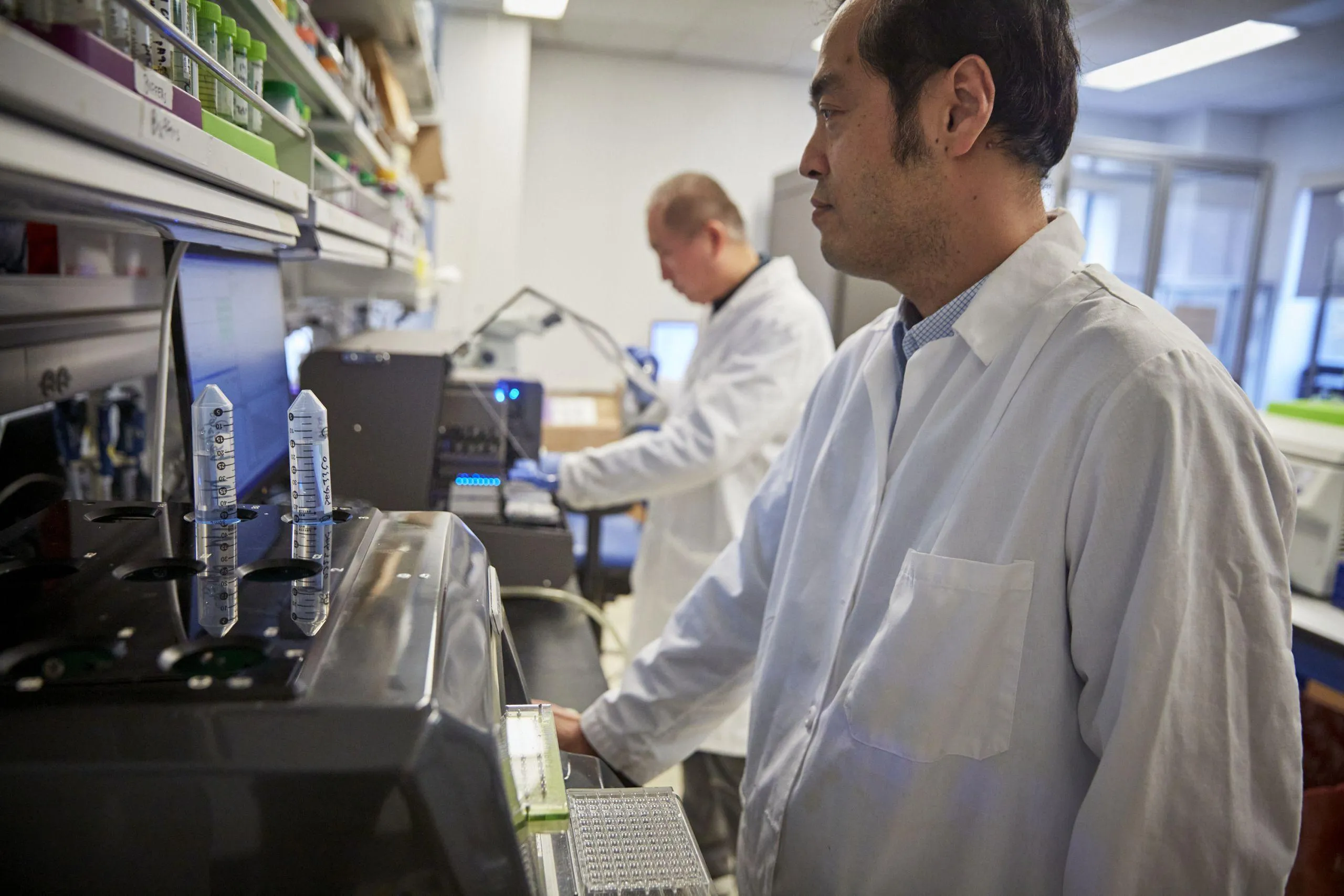
Special Projects Group Lab
From protein production to structure and function
The SPG Laboratory conducts collaborative and investigator-driven research aimed at understanding biological mechanisms at the molecular level. The laboratory combines structural, biochemical, and biophysical approaches to investigate protein structure and function.
Research projects frequently integrate multiple technologies, allowing investigators to move from protein production and characterization through high-resolution structure determination and functional validation. This comprehensive workflow provides a powerful platform for both fundamental biological discovery and translational research applications.
The laboratory maintains expertise across a broad range of structural biology methodologies and works closely with NYSBC core facilities to provide access to advanced instrumentation and specialized technical capabilities.
Methods and Capabilities
Structural Biology
X-ray crystallography
Single-particle cryo-electron microscopy
Structural analysis of protein complexes
Protein Science
Recombinant protein expression
Protein purification
Complex assembly and characterization
Protein engineering
Biophysical Characterization
Microscale thermophoresis (MST)
Protein–protein and protein–ligand interaction analysis
Label-free and fluorescence-based binding studies
Protein stability and thermal unfolding analysis
Research Areas
Structural immunology
Structure-guided drug discovery
Infectious disease and biodefense research
Membrane protein structural biology


Publications
Structures of distinct human acetylcholinesterase tetramer forms in complex with synaptic anchoring proteins
Structure
Figure S7 from Identification of Small-Molecule Inhibitors that Block the GTP-Binding Pocket of K-Ras and Other Members of the Ras Superfamily of Small GTPases
Figure S8 from Identification of Small-Molecule Inhibitors that Block the GTP-Binding Pocket of K-Ras and Other Members of the Ras Superfamily of Small GTPases
Table S2 from Identification of Small-Molecule Inhibitors that Block the GTP-Binding Pocket of K-Ras and Other Members of the Ras Superfamily of Small GTPases
Supplementary Data File 1 from Identification of Small-Molecule Inhibitors that Block the GTP-Binding Pocket of K-Ras and Other Members of the Ras Superfamily of Small GTPases
Figure S5 from Identification of Small-Molecule Inhibitors that Block the GTP-Binding Pocket of K-Ras and Other Members of the Ras Superfamily of Small GTPases
Table S1 from Identification of Small-Molecule Inhibitors that Block the GTP-Binding Pocket of K-Ras and Other Members of the Ras Superfamily of Small GTPases
Figure S4 from Identification of Small-Molecule Inhibitors that Block the GTP-Binding Pocket of K-Ras and Other Members of the Ras Superfamily of Small GTPases
Identification of Small-Molecule Inhibitors that Block the GTP-Binding Pocket of K-Ras and Other Members of the Ras Superfamily of Small GTPases
Molecular Cancer Therapeutics, Vol. 25, Issue 1, Pages 84-93
Data from Identification of Small-Molecule Inhibitors that Block the GTP-Binding Pocket of K-Ras and Other Members of the Ras Superfamily of Small GTPases
Figure S2 from Identification of Small-Molecule Inhibitors that Block the GTP-Binding Pocket of K-Ras and Other Members of the Ras Superfamily of Small GTPases
Figure S3 from Identification of Small-Molecule Inhibitors that Block the GTP-Binding Pocket of K-Ras and Other Members of the Ras Superfamily of Small GTPases
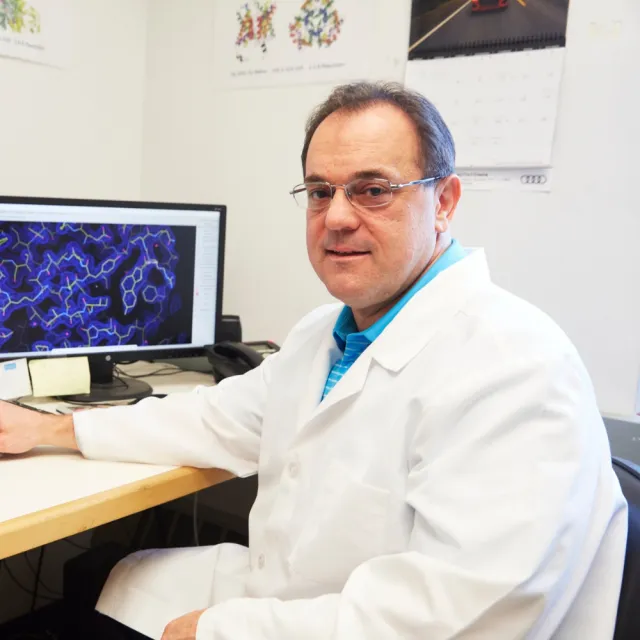
“We use structure to go after specific problems—how a Lyme-disease antibody locks onto its target, how a small molecule can block ricin or Shiga toxin. Running the whole pipeline in one lab, from the gene to the final structure, lets us follow a single question from a protein sequence to a candidate inhibitor without handing it off.”